Mercurius vivus: Understanding Instability and Regulation in Children with Attention and Emotional Challenges

In homeopathic practice, certain remedies seem to appear again and again in particular kinds of cases — not because of a diagnostic label, but because of a recognisable pattern of experience. Mercurius vivus is one such remedy: complex, changeable, and often quietly present in children whose inner world feels difficult to stabilise.
Traditionally, Mercurius is understood through themes of instability, fluctuation, and poor resolution. Nothing quite settles. Symptoms shift, emotions oscillate, and processes — whether physical, mental, or emotional — seem to begin but not fully complete. This lack of steady equilibrium can be felt across the whole organism.
When we look at some neurodiverse presentations through this lens, a subtle correspondence can emerge. Rather than seeing difficulty with focus, impulsivity, or emotional regulation as isolated traits, we might begin to perceive a broader pattern: a system that is highly sensitive, reactive, and yet struggles to organise and stabilise its responses. Attention flickers, emotions overflow, impulses arise before they are processed — not from lack of capacity, but from a difficulty maintaining coherence.
This article explores (with the help of ai) the themes of Mercurius vivus and considers why it may come into view in certain children where regulation — rather than ability — is at the heart of the experience. As always in homeopathy, the aim is not to match a remedy to a label, but to recognise the deeper pattern expressed by the individual.

A central theme: instability and fluidity
One of the most consistent impressions of Mercurius vivus (across Kent, Clarke, and Hering) is instability — nothing holds its form for long.
changeable symptoms
fluctuation between extremes
lack of clear boundaries (mental, emotional, physical)
From a homeostatic perspective, it almost feels like the organism cannot settle into equilibrium — it overshoots and oscillates.
This echoes that idea of the pendulum never quite finding centre.
Blurring of boundaries (self / other / inside / outside)
Another lens is the loss of differentiation:
confusion of identity
suggestibility
merging / contamination themes
difficulty separating one’s own experience from the environment
Polarity and contradiction
Mercurius is full of simultaneity of opposites:
hot and cold
desire for company yet aversion
impulsive yet sluggish
communicative yet confused
In Mercurius, it’s almost as if the system cannot resolve polarity — it lives in the friction between them.
Nervous system sensitivity and reactivity
If we bring in a more contemporary lens, there can be:
hypersensitivity to stimuli
rapid overwhelm
disorganised responses
poor filtering
Reacts too strongly and inconsistently to relatively small inputs

Emotional dysregulation in Mercurius
Rather than a single, clear emotional tone, Mercurius often shows:
rapid shifts, inconsistency, and lack of containment
emotions change quickly
reactions feel disproportionate
there’s difficulty settling back to baseline
It’s not just intensity — it’s instability of emotional state.
The oscillation
pendulum swings
exaggerated reactions
difficulty returning to centre
In Mercurius, this can look like:
calm → irritable → tearful → withdrawn
affection → aversion
engagement → overwhelm
And often quite quickly.
So one might say:
The system reacts… but cannot complete the reaction and integrate it.
Poor differentiation of feeling
Another layer is unclear emotional boundaries:
“What am I feeling?” is not well defined
feelings may be influenced by others
emotions can feel intrusive rather than owned
Linking to Kent’s Understanding:
difficulty processing, interpreting, organising experience
So the dysregulation is not just emotional — it’s also perceptual.
Reactivity without regulation
From a Vithoulkas-style lens:
high sensitivity
strong reaction to small stimuli
but poor modulation of that reaction
This can appear as:
sudden anger
impulsive outbursts
emotional flooding
But unlike some remedies, it may lack a clear narrative (e.g. injustice, fear, control).
The inner pressure
There’s often a sense of:
internal build-up
needing to discharge
This may come out as:
irritability
snapping
restless movement
or a “need to escape”
So the dysregulation may be:
pressure → overflow → partial relief → build-up again
Confusion within the emotional field
Mercurius can also show:
contradictory emotions at the same time
uncertainty in relationships (wanting closeness but pushing away)
mistrust or suspicion arising quickly
In children
This may translate into:
difficulty self-soothing
rapid escalation
unpredictable responses
sensitivity to environment or people
withdrawal after overwhelm
Emotional dysregulation in Mercurius is less about what is felt, and more about the inability to regulate, differentiate, and stabilise emotional experience.
Focus and Mercurius — not simply “poor concentration”
With Mercurius, it’s often not a straightforward lack of ability or capacity.
Rather, it can feel like:
attention is unstable, inconsistent, and easily disrupted
can engage… but not sustain
starts tasks, then drifts
attention flickers rather than holds
So the issue may be less:
“I can’t understand”
and more:
“I can’t stay with the process long enough to understand”
The quality of confusion
In classical descriptions, Mercurius shows:
confusion of mind
slow or clouded thinking at times
then moments of sharpness
This creates an experience of:
inconsistency in cognitive function
sometimes capable, sometimes lost
Which can be particularly visible in structured subjects like maths.
Why maths?
Maths demands:
sequential thinking
stable attention
clear differentiation (this vs that, step 1 → step 2)
internal order
These are precisely the areas where Mercurius can struggle:
losing track mid-process
mixing steps
difficulty holding the “thread”
errors that seem careless but reflect disorganisation
Maths exposes the lack of internal structure and continuity.
Fluctuation again
You may notice:
one day they can do it
next day they cannot
This variability is very characteristic.
Linking back to this tendency towards:
oscillation, inconsistency, difficulty stabilising.
Overwhelm and shutdown
Another layer:
too much input → overwhelm
overwhelm → confusion or disengagement
So in a classroom setting:
noise, pressure, expectation
→ disrupts already fragile focus
And then you might see:
avoidance
“checking out”
or that urge to escape
The difficulty with focus — especially in structured subjects like maths — reflects a lack of stability in the understanding, where attention, sequencing, and clarity cannot be reliably maintained.

Impulsivity without a clear centre
In Mercurius, impulsivity often doesn’t arise from:
strong will (as in Nux or Tubercular remedies)
intense emotion (as in Chamomilla or Stramonium)
Instead, it can feel like:
action occurring before organisation has taken place
Almost as if:
perception → reaction
with very little integration in between.
Link to the Understanding (processing gap)
In Mercurius:
perception is unstable
processing is inconsistent
differentiation is unclear
So what happens?
the system reacts before it has fully understood
This can appear as impulsivity, but its root may be:
a gap in processing rather than excess drive.
Confusion → reaction
Another way of seeing it:
input feels unclear, shifting, or overwhelming
the system cannot stabilise it
so it discharges quickly
This gives:
sudden speech
abrupt actions
emotional outbursts
Not because the impulse is strong — but because:
it is not being modulated
Instability of inhibition
If we think in terms of regulation:
healthy system → impulse arises → is modulated → expressed appropriately
Mercurius → impulse arises → inhibition is unreliable
So the impulsivity may reflect:
weak or inconsistent inhibitory control, which aligns with the broader theme of:
instability
fluctuation
lack of containment
Pressure and discharge
Linking to the earlier theme:
internal build-up (mental, emotional, even physical)
need to discharge
Impulsivity may be one form of that discharge:
acting quickly
speaking without filtering
moving before thinking
So it can feel like:
“something builds… and must come out now”
In children
In the children you’re seeing, this might look like:
interrupting
acting before instructions are complete
sudden shifts in behaviour
difficulty pausing
But importantly:
not always consistent
not always predictable
Again, the fluctuation is key.
Differentiating the quality of impulsivity
It may help to contrast:
Tarentula → purposeful, driven, almost strategic impulsivity
Hyoscyamus → disinhibited, often attention-seeking
Stramonium → fear-driven, chaotic
Tubercular remedies → restless, seeking change
Mercurius feels more like:
disorganised impulsivity — arising from instability rather than intention
Impulsivity in Mercurius arises from a failure of regulation between perception and action —
where unclear processing, inner pressure, and weak inhibition lead to rapid, unmodulated responses.

Mercurius vivus can resonate with presentations labelled ADHD when the core issue is not just inattention or activity, but instability of regulation across the whole system.
Instability rather than deficiency
Fluctuation rather than fixed traits
Poor regulation rather than lack of capacity
This shows up as:
attention that cannot stabilise
emotions that shift rapidly
impulses that are not modulated
responses that don’t resolve cleanly
When a child labelled ADHD expresses this particular quality of instability —
Mercurius may come into view.
many remedies can appear in ADHD presentations
Mercurius is just one pattern among many
What distinguishes it is not the label, but the quality of disorganisation, fluctuation, and permeability running through the case.
In the end, Mercurius vivus invites us to look beyond surface behaviours and into the deeper question of regulation — how a child processes, responds, and returns to balance. When we recognise this underlying pattern of fluctuation and instability, the remedy becomes less about matching symptoms and more about understanding the child’s lived experience. As with all homeopathic work, it is this careful attention to individual expression that allows the prescription to emerge with clarity and respect for the whole person.
For families navigating these patterns, working with a qualified homeopath can offer a space to explore the child’s experience in a more individual and nuanced way. Rather than focusing solely on labels or isolated behaviours, the homeopathic approach seeks to understand the deeper pattern of response — how the child perceives, reacts, and restores balance. Through careful case-taking and ongoing reflection, this can support a more integrated view of the child, and open a gentle path toward greater stability and ease over time.
*** These remedy posts are for educational purposes, and to show the scope and diversity of homeopathic remedies for ADHD, P/P and ASD. Not suggestions for home-prescribing. Homeopathic treatment for neurodevelopmental and neuropsychiatric conditions requires the guidance and knowledge of a qualified and experienced homeopath. If you relate to this remedy, and would like to know more you will find further information online ***

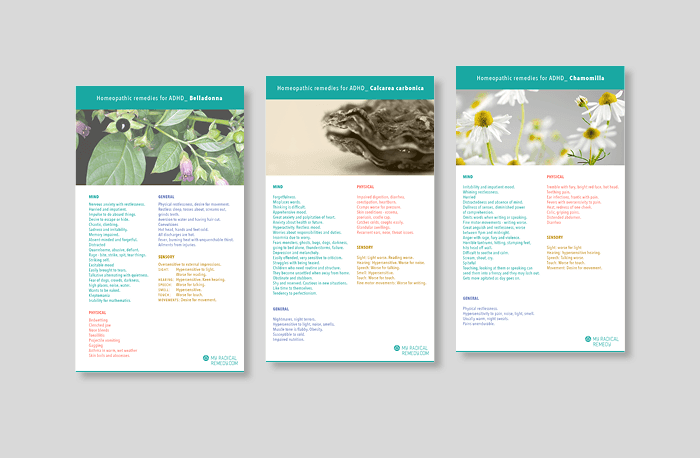
Link to full size Remedy Cards
As a homeopath, I am available for consultations. If you would like to explore this modality for your child you can schedule a discovery call here: